
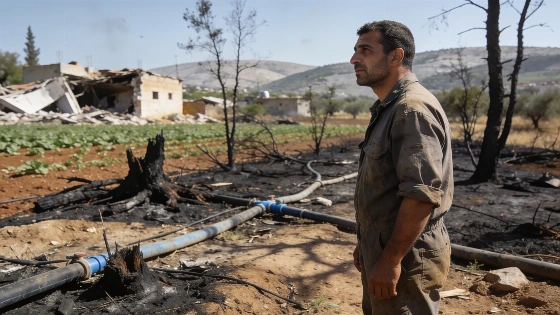
Lebanon has suffered environmental damage topping 512 million US dollars across 2023 and 2024, Prime Minister Nawaf Salam reported. He shared this figure during his speech at the United Nations Climate Change Conference (COP31) in Antalya, Türkiye. The estimate covers destruction to infrastructure, farmland, forests, ecosystems, and local livelihoods. Salam pointed out that these losses happened during the hostilities between Israel and Hezbollah, which started in October 2023 and continued into 2024 before a ceasefire. He also mentioned that more environmental losses occurred in 2026, so the 512 million dollar figure does not reflect the current total. Available reports do not break down the estimate by sector or provide an independent environmental assessment.
Salam said Lebanon's climate problems are tied to the fallout from war and economic collapse. He explained that years of financial crisis have weakened public institutions and facilities. This has reduced the state's ability to prevent, assess, and repair environmental damage. Repeated conflicts have left widespread devastation. The destruction has hit not only residential or military sites but also infrastructure, farmland, forests, and ecosystems. Environmental recovery now sits within Lebanon's broader reconstruction challenge, alongside restoring basic services and national institutions.
Environmental Impact and Recovery Needs
The Prime Minister described the environmental losses as a violation of international humanitarian law. He said the scars left by war will remain in ecosystems, livelihoods, and communities for years. Salam's remarks at COP31 framed the environmental consequences of the attacks as violations of international humanitarian law, though this is a political and legal position rather than a judgment or damages ruling from an international court.
Physical signs of ecological and agricultural damage include more than 1,000 fires that burned about one-tenth of southern Lebanon after the conflict began in October 2023. The area burned—including forests, olive groves, and agricultural fields—was nearly 80 times greater than before the conflict, according to L’Orient Today. Additional reporting cited by The National attributed the loss of 16,000 hectares between October 2023 and September 2026 to burning from phosphorus bombardment or conventional munitions. Further impacts include unusable farmland, destroyed crops and forests, affected marine life, and soil contamination.
Salam argued that recovery efforts must address more than rebuilding physical infrastructure. He called for reclaiming agricultural land and rehabilitating damaged ecosystems. Restoring livelihoods is also essential to the reconstruction process. He stressed that environmental restoration is a reconstruction requirement, not something to be tackled after infrastructure repair. Salam linked these priorities to stability, restoration of sovereignty, and respect for international law. No implementation timetable, approved budget, named executing agency, or funded project list for these environmental recovery efforts appears in the available reports.
Climate Adaptation and Reconstruction Strategy
Salam said Lebanon is committed to making environmental restoration and climate adaptation capacity central to its reconstruction strategy. He tied these priorities to broader goals of achieving stability, restoring sovereignty, and upholding international law. Lebanon's national climate-adaptation plan reportedly requires 11 billion US dollars through 2035. Broader conflict-related damage and losses since 2023 have been estimated at more than 20 billion US dollars, though these figures cover a wider scope than the environmental loss estimate Salam cited.
The Prime Minister acknowledged that national efforts alone cannot overcome Lebanon's structural and financial constraints. He appealed for more public financing and a greater role for grants, along with easier access to existing funding mechanisms, especially for countries affected by conflict and crisis. Salam's appeal reflects Lebanon's weakened fiscal and institutional position after years of financial crisis. The Congressional Research Service, citing World Bank estimates, reported that Lebanon's GDP contracted by 7.1% in 2024. The country saw 7.2 billion US dollars in economic losses and 6.8 billion US dollars in physical damage from conflict since October 2023. These totals are broader than the environmental estimate and show the financial context in which environmental remediation must compete with reconstruction, public-service restoration, and macroeconomic stabilization.
For further details on Salam's position and Lebanon's reconstruction priorities, see the original coverage at Daily Beirut.