
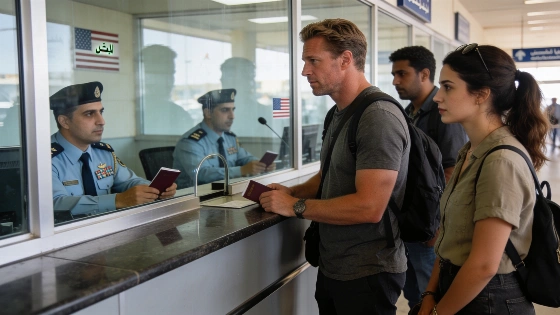
Travellers faced unexpected delays at Syrian borders this week when the Interior Ministry suddenly required US citizens to secure prior approval before entering the country. This rule, which also covered British citizens, came without warning and immediately disrupted travel plans. Both air and land arrivals were affected. The Syrian Arab News Agency (SANA) reported that the restriction was lifted on 13 November 2026 after widespread criticism and accounts of Americans being turned away at border points. Muhammad Yaqub al-Omar, Deputy Minister of Foreign Affairs and Expatriates for Consular Affairs, said that "entry procedures for US and British citizens have returned to their previous arrangements after the prior approval requirement was lifted." Entry rules for other nationalities stayed the same under existing guidelines. The official statement did not indicate that all nationalities could enter without advance arrangements; the restoration specifically applied to US and UK citizens (SANA).
The restriction was reversed within days. Mazen Allouch, director of international relations at Syria’s General Authority for Ports and Customs, told the Syrian fact-checking platform Taakkad that the preapproval requirement for US citizens had been cancelled and entry procedures had reverted to their earlier form. Allouch called the measure temporary and now withdrawn. The reversal followed reports that new guidelines had required "tourist visitors of all nationalities" to arrange travel through a tour operator or agency and obtain visa pre-approval before arrival, with immigration authorities keeping final say over entry. These guidelines reportedly took effect on Thursday and were reversed by Friday, 13 November 2026, after online criticism and reports of travellers being denied entry (The New Arab).
Tourism sector reacts to sudden visa changes
The abrupt rollout of the preapproval rule drew strong criticism from tourism professionals and social media users. Many warned that such restrictions could hurt Syria’s efforts to revive its tourism sector, which has seen a marked increase in visitors. State-run SANA reported that more than 3.5 million people visited Syria in the first half of 2026, up from 1.6 million during the same period in 2025. However, the agency did not publish the methodology for these figures, and it remains unclear whether the count covers foreign tourists, all arrivals, diaspora visits, or another group. The debate over entry requirements showed how sensitive the tourism sector is to sudden regulatory changes, which can disrupt tour operators, advance bookings, and traveller confidence.
On Thursday, the travel information website Syrian Guides posted a notice stating that tourists of all nationalities would need to arrange travel through a tour operator or agency, limiting independent travel. By Friday, the site updated its guidance, confirming that the US- and UK-specific restriction had been lifted while other rules stayed in place. Syrian Guides stressed that this was not an announcement of visa-free entry for every nationality and that passport, travel purpose, entry route, and airline checks could still affect individual trips. The site also pointed out that advance approval and a visa issued on arrival are different processes, advising travellers to confirm requirements for their specific plans rather than relying on the general reversal.
Entry procedures and ongoing risks
US citizens can now get a 30-day visa on arrival for about $200 at Damascus International Airport or at land borders with Jordan and Lebanon, according to the US State Department. Despite the return of visa-on-arrival access, the department continues to advise against travel to Syria due to ongoing security risks, including sporadic violence and incidents like a bus bombing outside Damascus in August. The US "do not travel" advisory remains in place and was not changed by the entry-rule reversal.
The dispute over entry requirements played out during Syria’s post-Assad political transition. The current Syrian government took office after Islamist-led fighters ousted Bashar al-Assad in December 2024. Since then, Western travellers have reportedly been able to get entry visas directly at Damascus International Airport or at Syrian land crossings, so the sudden addition and removal of a pre-authorization barrier disrupted a recently more accessible travel process for some Western passport holders.
Tourism remains a key source of foreign currency for Syria’s reconstruction. The World Bank estimated in October 2025 that rebuilding costs had reached $216 billion. The government has tried to boost tourism by easing entry restrictions and encouraging investment. In August, Visa and Mastercard resumed operations in Syria, and Reuters reported that several hotel groups are considering expansion in the country, drawn by its coastline and historical sites.
Under former President Bashar al-Assad, US citizens and most other foreign nationals had to obtain visas before arrival. The policy landscape changed after US President Donald Trump met interim Syrian President Ahmed al-Sharaa in May 2025, which led to the end of most US sanctions and the removal of Syria’s designation as a state sponsor of terrorism in August 2026.