
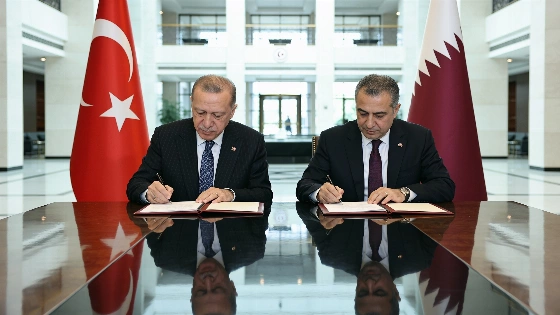
Turkey’s legislative process for the Makkah Defence Pact wrapped up as the law appeared in the country’s official gazette on 14 November 2026, confirming Ankara’s commitment to collective defence with Saudi Arabia and Pakistan. The Turkish Grand National Assembly passed the measure by 279 votes to 119 on 5 November, after the pact’s signature in Mecca on 7 August 2026 during a summit involving the three regional powers. The legislation formalised Ankara’s domestic legal approval of the "Mecca Agreement for Joint Defense Between the Republic of Türkiye, the Islamic Republic of Pakistan and the Kingdom of Saudi Arabia". Under the agreement, an external armed attack against one party is treated as an attack against all three. This sets up a framework for collective security and defence cooperation. The law took effect immediately upon publication, marking the final domestic milestone for Türkiye’s participation in the pact. Official Gazette announcement.
The Makkah Defence Pact aims to boost military coordination and intelligence sharing among the three countries. The agreement is based on the principle that an attack on one signatory is considered an attack on all, echoing the collective defence concept found in Nato’s Article 5. The pact brings together three predominantly Muslim states that are also United States security partners, against a backdrop of escalating conflict and instability across the Middle East. The agreement provides a framework for closer military coordination and regional security consultation, but does not automatically prescribe specific troop deployments in every incident.
Regional Security and Implementation
Implementation of the pact has drawn attention amid a surge in Houthi attacks targeting Saudi Arabia. In October 2026, a Houthi attack on Riyadh’s King Khalid International Airport killed 13 people and wounded more than 300, according to Reuters. Subsequent attacks have targeted Saudi airports and oil infrastructure, increasing the strategic relevance of air defence and intelligence sharing. On 11 November 2026, Saudi air defences intercepted Houthi missiles and drones directed toward Riyadh, Mecca, and other areas. Saudi Arabia has responded with airstrikes against Houthi targets in Yemen. The escalation has created pressure for stronger regional security arrangements. Reuters report.
Under the terms of the pact, Saudi Arabia receives a collective defence commitment from Turkey, which maintains Nato’s second-largest army. However, Turkish Defence Minister Yasar Guler has stated that Ankara will not deploy troops to fight the Iran-backed Houthis under the agreement. The agreement is intended to provide a framework for military and defence-industry cooperation, rather than mandating automatic troop deployments.
Turkey and Qatar Sign Separate Defence Agreement
On 13 November 2026 in Istanbul, Turkish President Recep Tayyip Erdoğan and Qatari Emir Sheikh Tamim bin Hamad al-Thani signed a separate mutual defence agreement. The agreement commits the two governments to consult over threats to their security and defence policy. It also provides for expanded joint military exercises and personnel-training exchanges. The agreement was concluded during a meeting of the Türkiye-Qatar Supreme Strategic Committee and was presented as a mechanism for collective defence and regional security rather than as an amendment to the trilateral Mecca pact.
The joint statement highlighted the commitment of Turkey and Qatar to safeguarding their sovereignty and territorial integrity, as well as their shared vision for a more secure and stable regional order. Turkish President Tayyip Erdogan and Qatar's Emir Sheikh Tamim met in Istanbul to finalise the agreement. The two countries also expressed readiness to expand energy cooperation.
According to the Turkish presidency, President Erdogan emphasised continued collaboration to prevent renewed conflict in the Gulf region and to support dialogue and peace efforts. The sequence of recent agreements establishes three distinct dates: the signature of the trilateral Mecca pact on 7 August 2026, Turkish parliamentary ratification on 5 November, and domestic legal effectiveness on 14 November, with the Türkiye-Qatar agreement signed in Istanbul on 13 November 2026.
Amid the security escalation, Türkiye, Saudi Arabia, and Pakistan have also engaged in diplomatic contacts with Iran. Senior officials from Riyadh, Ankara, and Islamabad met Iranian officials in Tehran in October 2026, with Tehran stating that talks with Riyadh were continuing in pursuit of regional security arrangements that would exclude foreign military involvement.
For further background, see previous coverage.