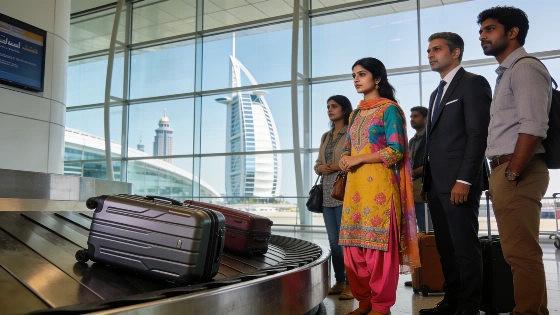
Dubai’s tourism sector has picked up pace, with international arrivals and hotel occupancy hitting some of their highest marks in recent years. In August 2026, the city welcomed about 869,000 international overnight visitors, the strongest monthly total since February. This pushed the tally for the first eight months of the year to 6.97 million. Hotel occupancy reached 66 per cent in August, up from 36 per cent in March, and hotel room inventory neared 149,000 rooms by month’s end. Hotels across the emirate logged 21.61 million occupied room nights during this stretch. Official destination-marketing in 2026 promoted accommodation, dining, attractions and business-event programming, as shown on the Visit Dubai commercial offers page.
South Asia, especially India, remains at the heart of Dubai’s tourism plans. Bader Ali Habib, Regional Head, Proximity Markets at the Dubai Department of Economy and Tourism (DET), said the next step is to reach a wider range of Indian travellers. Habib pointed out that while Tier I Indian cities already know Dubai well, the focus is moving to luxury and ultra-luxury segments and younger travellers, particularly from Tier II and Tier III cities. “We want to make sure that we can build a relationship with them very early on, so when they take their first trip outside India, it should be Dubai,” Habib stated.
Expanding Experiences and Infrastructure
Dubai’s strategy now looks past familiar attractions. The city is promoting exclusive events, art galleries, concerts and Fashion Week to draw affluent Indian visitors who want more than standard sightseeing. For Gen Z travellers, DET is rolling out campaigns that spotlight stories of entrepreneurs and sportspeople living in Dubai, moving away from celebrity-focused marketing. The plan also targets smaller Indian cities, reaching out to textile merchants and pharmaceutical professionals as well as first-time international travellers. Official event listings show Dubai continues to market festivals, concerts, business events and sports experiences as destination products in 2026, including the Dubai Premier Padel P1 set for 15 November 2026 at the Hamdan Sports Complex.
Infrastructure upgrades are backing this broader tourism vision. Dubai’s Metro network is on track for an 80 per cent expansion by 2032, aiming to weave public transport into the visitor experience and cut reliance on private vehicles. Automated immigration has already sped up arrivals. Habib noted that visitors can get to their destination within an hour of landing. The Sustainable Tourism Stamp has gone to about 230 hotels, and Dubai’s Urban Plan 2040 aims to set aside 60 per cent of the emirate as a reserve and double green spaces and parks.
Business, MICE and the India-Dubai Connection
The India-Dubai relationship runs deep in business and investment. Indian companies have a strong presence in Dubai’s hospitality, retail, real estate and startup sectors. Brands like Taj and Oberoi are already established, and Habib suggested that others, including ITC, could enter the market in the coming years. Indian startups have increasingly picked Dubai as a base since the pandemic, drawn by the business community and networking opportunities.
Dubai is also working to become a major destination for meetings, incentives, conferences and exhibitions (MICE). Expo City is expected to grow into a new MICE hub by 2030, with new venues and expansions underway. At Arabian Travel Market 2026, DET was joined by more than 115 co-exhibitors, and over 300 international travel trade professionals took part through the ATM Hosted Buyers Programme. Habib stressed the need for collaboration with stakeholders to strengthen Dubai’s tourism ecosystem.
Tourism Development and Future Prospects
Several new projects are shaping Dubai’s tourism scene. Hatta is being developed with new attractions, cable cars and food and beverage outlets, while Palm Jebel Ali is under construction as an entertainment and lifestyle destination. The Dubai Exhibition Centre is set to add more capacity for exhibitions and conferences. Wellness offerings are moving beyond traditional spa experiences to include longevity, health and biotech services. The city’s D33 vision guides these developments, aiming to diversify Dubai’s tourism economy and build deeper ties with India’s varied traveller segments.
Dubai’s approach now focuses on providing distinct experiences for leisure travellers, luxury visitors, younger consumers, MICE groups, entrepreneurs and investors from India. The strategy is less about boosting arrival numbers and more about making sure each segment finds strong reasons to engage with Dubai across travel, business and investment.