
Dubai's Knowledge and Human Development Authority (KHDA) has rolled out a safeguarding framework that requires private education institutions to set up clear steps for reporting and managing bullying. These rules now cover learners up to age 21, including those in online programmes.
With the framework in place, schools must name safeguarding leads, train staff, and keep records of reported incidents until each case is closed. The KHDA has also released a guide to help parents understand how to raise concerns and what happens when they report issues to the school.
Challenges in identifying bullying
Recent findings show how tough it can be for families and schools to spot bullying. A 2025 survey of 629 UAE students in Grades 6 to 8 found that 73 per cent of those who faced bullying had not told anyone. Only 41 per cent of respondents knew how to report bullying at school, and 49 per cent were unsure if their school had a designated person to handle such cases.
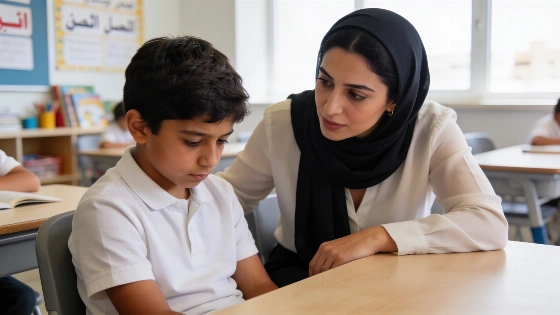
Educators in Dubai point out that bullying does not always leave visible marks. May Zalat, inclusion director at Kids First Group, urged parents to watch for shifts in behaviour, like a child who once liked school becoming reluctant to go, pulling away from friends, or seeming upset after using their phone. Ed Staton, principal of Gems Metropole School in Motor City, said unexplained injuries, missing belongings, changes in appetite, or slipping grades can also be warning signs. He noted that while physical bullying is easier to spot, other forms can cause just as much harm and are often harder to detect.
Understanding the signs and supporting children
Richard Drew, principal of Jumeira Baccalaureate School, said students might face exclusion from groups, unkind comments, or negative interactions on social media. He explained that it's important to tell the difference between ordinary disagreements and bullying, which usually involves repeated harmful behaviour and an imbalance of power. Ms Zalat said repeated exclusion, ridicule, or making a child feel different should not be brushed aside just because there is no physical aggression.
Many children hold back from speaking up about bullying because they fear things could get worse or worry their friends might turn on them. Mr Staton said schools need to build an environment where pupils feel safe sharing concerns and trust that adults will act. Ms Zalat advised parents to respond thoughtfully when children share difficult experiences, since some may worry about their parents' reaction or fear that intervention could make school life tougher. She also warned against downplaying bullying among boys or telling them to fight back, and stressed the need to spot both physical aggression involving girls and emotional bullying involving boys.
Cyberbullying and the role of parents
Bullying can continue after school hours through messaging apps and online groups. Mr Drew said inappropriate behaviour and hurtful messages may carry on after school, leaving children feeling alone. Mr Staton explained that digital communication can make it hard for children to get away from negative experiences, as online interactions can stretch into the evening. Ms Zalat encouraged parents to stay involved in their children's online friendships and talk about their interactions on social media and in games. She also said children should not turn to AI chatbots for support, since only responsible adults can provide real-world protection and follow-up.
Educators suggest parents listen calmly and reassure their children instead of trying to fix the issue right away. Mr Staton recommended having conversations in relaxed settings, like during a walk or shared activity, to ease pressure. Parents are told not to confront the other child or their family directly, but to work with the school and agree on steps to keep their child safe. For online bullying, saving screenshots or copies of messages can help the school's investigation. Ms Zalat suggested keeping notes on what the child has shared and asking the school about planned actions, which might include regular check-ins, more supervision, or follow-up meetings. Mr Staton said ongoing communication matters, since a single conversation or meeting does not guarantee a solution. He also pointed out that schools should focus on whether pupils feel comfortable reporting concerns, not just the number of complaints they receive.